
Before summer storms reach their full force, the native vegetation growing on your dune has exited its dormant season and is actively colonizing and anchoring your dune in place. The growing season for most dune-stabilizing plants begins in late spring and extends through hurricane season, a seemingly strategic pattern set in motion by Mother Nature. To help you maximize this year’s growing season and be prepared for potential storm action, we put together 7 steps that can be implemented in most counties during the summer months.
1. Dune Assessment
The first step is to assess your existing dune’s health. By understanding your dune’s strengths and having at-risk areas diagnosed, you will set the foundation for your property’s roadmap to coastal resiliency. A dune assessment will determine what steps need to be taken to stabilize and strengthen your natural barrier against storm surge. To obtain a dune assessment, you can reach our team of coastal erosion control experts at (866) 386-3737. To view our dune diagnosis sheet and familiarize yourself with how to identify potential risk factors on your property, click here.
2. Dethatch and Pruning
Dethatching is the process of removing dead organic plant material that has accumulated at the base of your native vegetation. This removal is critical because thatch concentrates moisture on the dune surface, leading to root rot and shallow root systems. Once weakened, these plants can be easily uprooted by wave action. To help address this issue, our team conducts routine dethatching, creating a cleaner dune system that encourages plants to redirect energy from maintaining excess growth to expanding their root systems. Overall, this work promotes stronger root development and further enhances dune stability.
3. Debris Removal
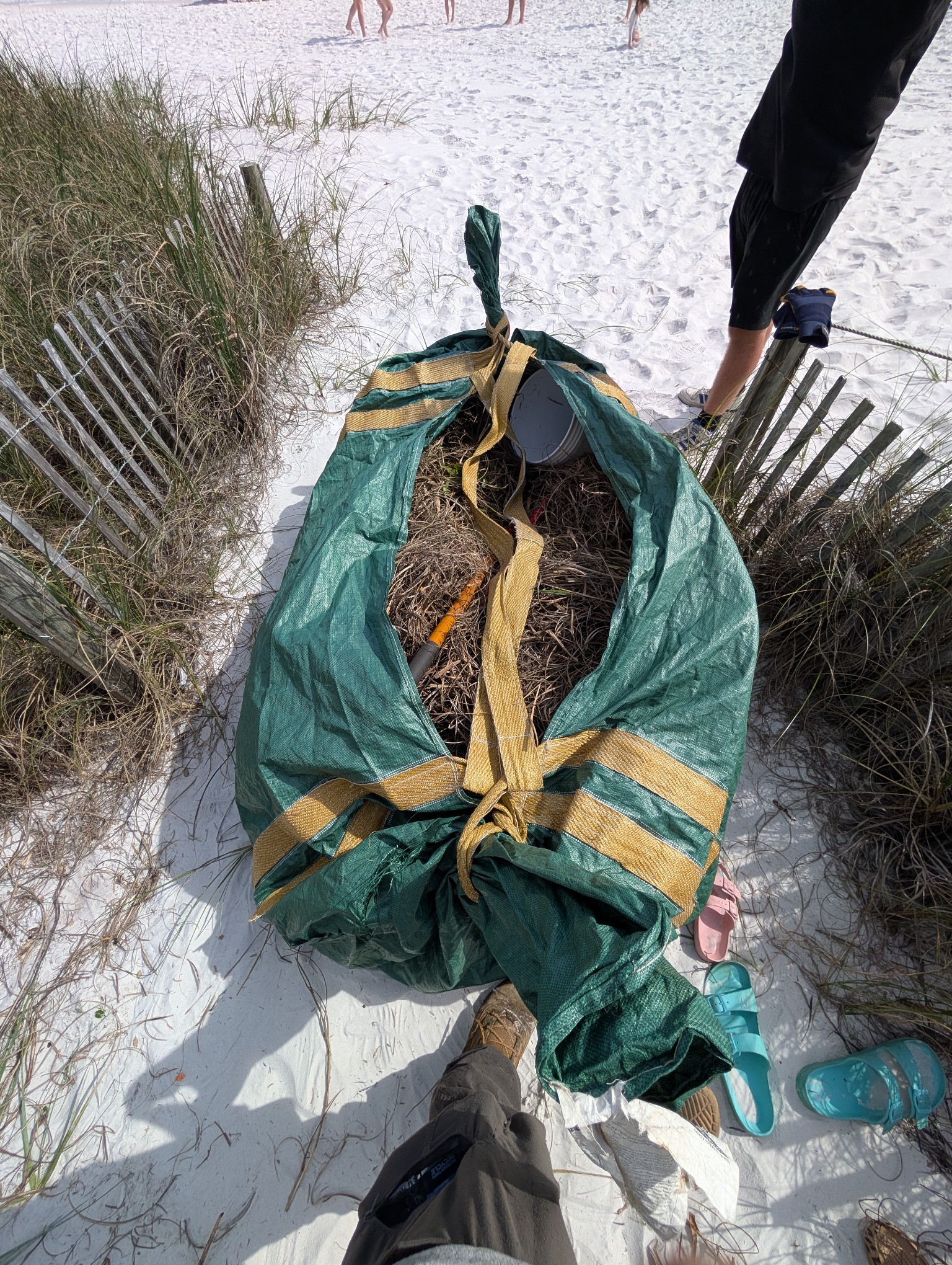
The dune system is often cluttered with debris following major events that attract large crowds, as well as after storms that deposit an unpredictable variety of materials on the beach. Common items include metal beach chairs, rubber tires, plastic bags, buckets, and glass bottles. While some of these objects can temporarily accrete sand, they remain unanchored and are easily mobilized by wave and storm action. As a result, debris can be transported landward, posing a risk to both the dune system and nearby properties. In addition, discarded debris can harm wildlife by creating entanglement hazards, obstructing nesting and foraging activities, and introducing plastics and other pollutants into sensitive coastal habitats.
4. Invasive Species Removal
By blocking sunlight and stealing nutrients and moisture from native plants, invasive species can rapidly destabilize a dune’s integrity. Invasive vines choke out the native grasses. Do not use a weedwhacker to remove the invasive plants because this will cause their seed pods to burst and further the species’ colonization of the coast. Instead, employ professional help to carefully extract these aggressive threats from your dune.
5. Fertilization
Grasses are the primary dune-stabilizing plants along the coast. To make the most out of their growing period, we recommend two applications of dune-specific, slow-release fertilizer at the end of spring and during summer.
6. Installation of New Plants
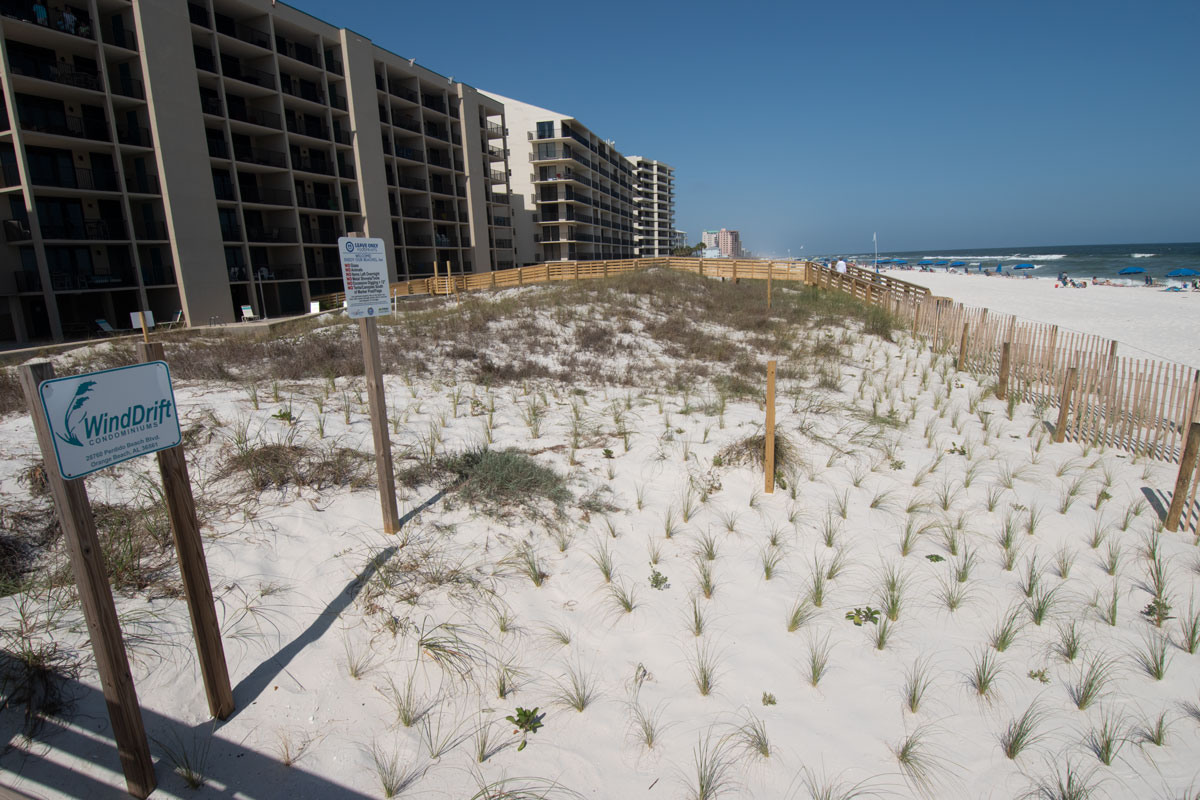
Bare areas on your dune are at risk of eroding faster than sections anchored by existing vegetation. Install new plants to stabilize the entirety of your dune.
7. Storm Recovery Plan
Having a Storm Recovery Plan ensures that you are prepared to build a new protective berm and replace damaged boardwalks after a storm. Call us today to discuss a personalized Storm Recovery Plan for your protective dune ecosystem.