• Skip to primary navigation
  • Skip to main content
  • Skip to primary sidebar
dune-doctors-logo
Search
Let’s Talk 866-386-3737
  • Get Started
    • Dune Diagnostic Form
  • Our Expertise
  • Our Services
  • About
    • Our Team
    • Our Clients and Coastal Partners
    • 25 Years History Timeline
  • Resources
    • Prescription for Protection
    • Articles
    • Videos
    • Regulatory Agencies
    • Science and Reports
  • Contact
  • Prescription for Protection
  • Get Started
    • Dune Diagnostic Form
  • Our Expertise
  • Our Services
  • About
    • Our Team
    • Our Clients and Coastal Partners
    • History Timeline
  • Resources
    • Prescription for Protection
    • Articles
    • Videos
    • Regulatory Agencies
    • Science and Reports
  • Contact
  • Prescription for Protection
  • Let’s Talk 866-386-3737
  • Our Expertise
  • Our Services
  • About
    • Our Clients and Coastal Partners
    • Our Team
    • Contact Us
  • Resources
    • Videos
    • Science and Reports
    • Articles
    • Prescription for Protection
  • ASBPA

Amanda Post

Planting for Protection with Fabien Cousteau and the Navarre Beach Marine Science Station

November 19, 2019 by Amanda Post

A Day for the Dunes

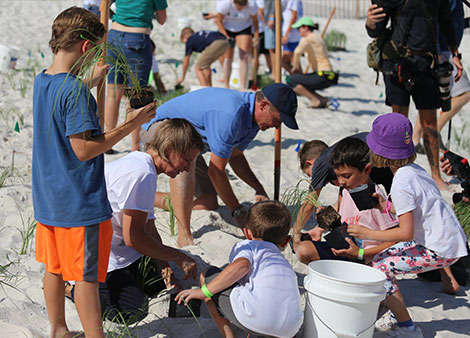
On September 28th, a group of roughly 500 community members and volunteers came together to plant sea oats on a vulnerable section of Navarre Beach dunes. Over time, the public had cleared a foot pathway to the beach, and we were given the opportunity to plant over this trail and on the landward side of the dunes. In partnership with the Navarre Beach Marine Science Station and the Fabien Cousteau Ocean Learning Center, we organized A Day for the Dunes an educational event about the importance of protecting our coastal ecosystems.

In addition to sea oats planting, the event had educational stations hosted by local organizations and schools. Gulf Breeze High School, Navarre Beach Lifeguards, Navarre Beach Fire Rescue, UP Divers, Pensacola Beach Elementary School and the Rotary Club of Navarre each directed a station and offered interactive activities to teach the public about the coastal ecosystem. Attendees who registered were given the opportunity to participate in Planting for Protection and help us install sea oats. Together with the outstanding students from the Navarre Beach Marine Science Station we taught the public how to plant sea oats and installed a grand total of 1,350 sea oats in a two-hour time span.
What is Planting for Protection?

Planting for Protection is our hands-on educational initiative designed to teach kids (and the general public) about the importance of coastal resiliency. Native sea oats are planted by participants under the guidance of mentors trained by Dune Doctors. For each event, we collaborate with teens who are passionate about the environment and show them how to install sea oats. The teens we train then mentor the little ones, and we observe a double positive. The kids get to plant sea oats on the dunes and by doing so take ownership of an environment they were not previously that aware of or familiar with. On the other hand, we have young adult mentors who are given a platform to share their passion for the environment with a young audience that embraces what they have to say. Everyone walks away feeling proud of their accomplishments and energized to educate loved ones and friends that could not attend.

Special Words from Fabien Cousteau

Fabien Cousteau, famed oceanographic explorer and conservationist, made a special appearance at this past event. Fabien has dedicated his career to educating society on the importance of protecting our oceans and is currently working to expand his educational non-profit the Fabien Cousteau Ocean Learning Center. The first grandson of Jacques-Yves Cousteau, Fabien embarked on an underwater expedition that lasted 31 days and live-broadcasted the journey for the whole world to see. As beaches are often the connection between ocean and land, protecting the health of our coastal ecosystems is vital to minimizing the amount of trash and debris that ends up in the water. Fabien urges everyone to pick-up trash left behind on the beaches and to embrace environmentally-conscious lifestyle changes such as avoiding single-use plastic.
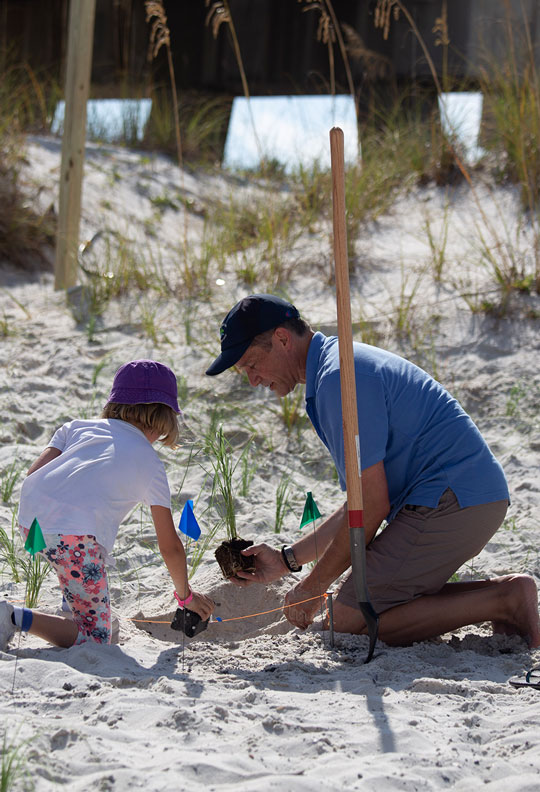
Fabien Cousteau teaching a child how to plant a sea oat

    “A Day for the Dunes is extraordinarily important for many reasons, its a sense of community. Its a sense of empowerment. Its a sense of doing good for our aquatic life the ecosystem that supports all life on this planet. It’s very important for kids to be empowered to make change happen and to make sure that their parents and their communities are helping them make that change.” 

Fabien Cousteau 

Our goal is to educate the next generation of coastal stewards who are joining in the fight in protecting our coastlines from erosion. We look forward to a new year full of Planting for Protection events. If you would like to implement a similar event with your community, email us at info(@) dunedoctors.com or call us at 866-386-3737.

“When you give a child a plant to put in the ground you give them ownership of a portion of that dune. After planting, they will be much more considerate of that environment once they hold a stake in it.” 

Frederique Beroset, MBA & M.S. Biology 

Filed Under: Planting for Protection Tagged With: Collaboration with Schools, Educational Programs, Fabien Cousteau, Fabien Cousteau Ocean Learning Center, How to get Planting for Protection for my school, Kid Programs, Planting for Protection, School programs

How You Can Help Save Baby Sea Turtles

July 5, 2019 by Amanda Post

It’s Time for a Sea Turtle Baby Shower!

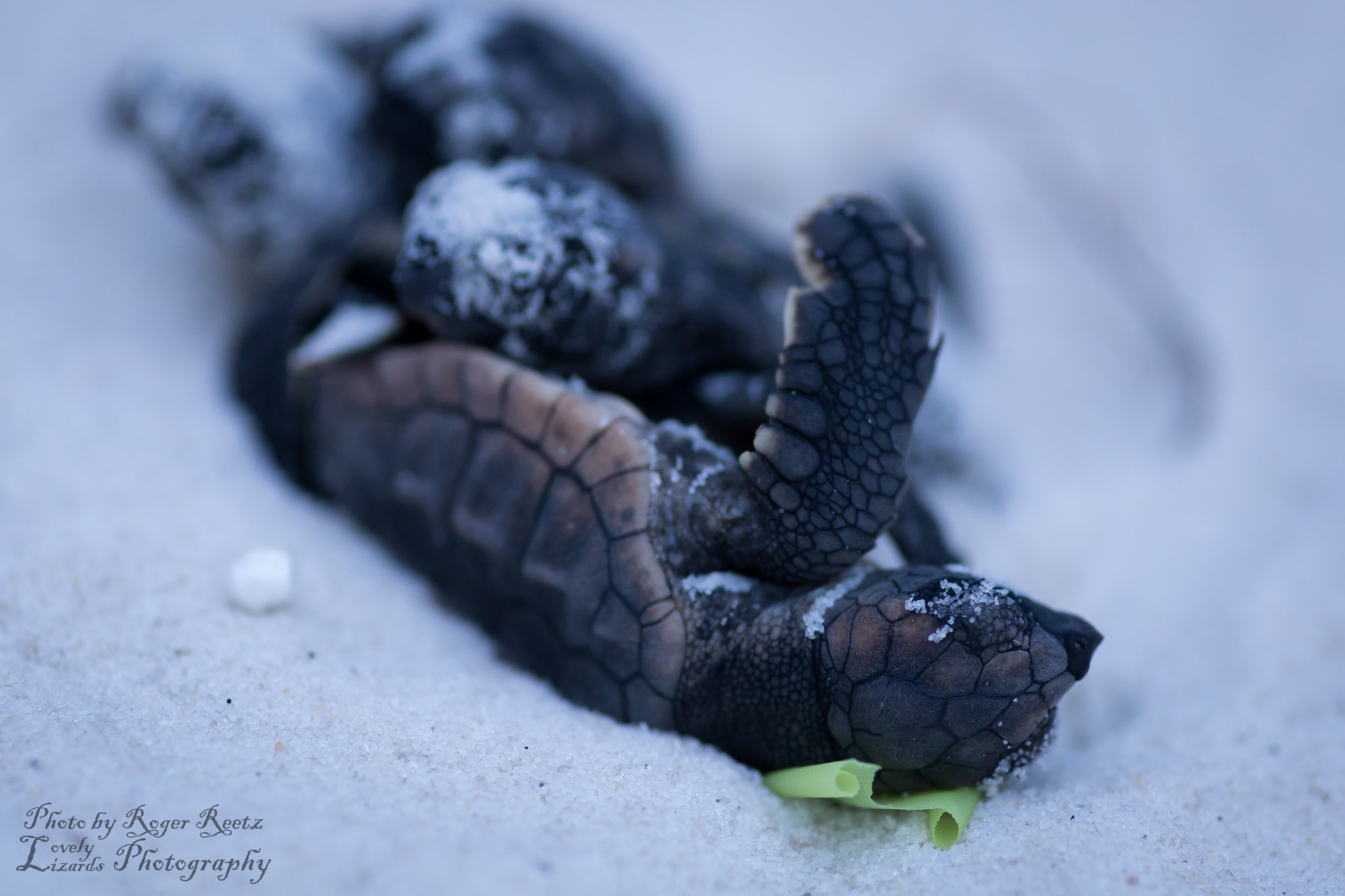
Mid-July, from beneath the sand all along the Florida and Alabama coast, hatchlings (baby sea turtles) began their journey to adulthood. Witnessing the turtles emerge from their nests and scurry to the water is a bucket-list experience for most beach lovers. With all the strength they can muster, the babies will have to brave enormous odds before finding safety in the open ocean. Relying on their sheer volume for protection, the hatchlings move in unison to overwhelm predators who lurk nearby. Those hatchlings who successfully make it to the crashing surf will have to swim long distances to make it past the coast. In the open water of the Sargasso Sea (an area of the Atlantic Ocean off the east coast), safety lies in free-floating seaweed. These island-like masses of algae function as nurseries in which the hatchlings can mature into adulthood. But, only a few will survive this dangerous journey. This is why we should do our best to provide safe passage for these hatchlings.

How Long Does the Incubation Period Last?

Buried out of the tide’s reach, thousands of sea turtle nests, from five different species, line the coast of Florida and Alabama. According to an in-depth Q&A provided by the Sea Turtle Conservancy, the average incubation takes 60 days and varies by species. During incubation, sand temperature greatly impacts two important aspects of embryo development. First, it dictates the speed of the process. The higher the sand temperature surrounding the eggs, the shorter the incubation periods. Second, the temperature of the sand impacts the ratio of the sex of the hatchlings. Cooler temperatures yield clutches (a group of eggs) with a higher male count while warmer temperatures tend to produce more females.

sea_turtle_boil

After Incubation Comes Digging!

Once incubation is complete, the hatchlings break out of their eggs using a temporary tooth called the caruncle located on the edge of their mouth. The eggshell has a soft, leathery texture and is roughly the size of a ping-pong ball. After hatching, the baby turtles remain under the sand for a number of days. During this time, the first few to exit their eggs, stimulate the others to do the same. According to SEE Turtles, before the babies can surface, each hatchling absorbs the remaining yolk attached to its umbilical cord. The yolk, an essential source of nutrients, is vital in providing the newly-hatched sea turtles with the necessary energy to dig, crawl, and swim their way offshore.

What Can You Do to Help the Hatchlings?

In order to achieve higher odds of survival, the hatchlings climb out of their nest in groups and huddle under the surface until the temperature of the sand cools. Cooler sands typically indicate that it is nighttime when hatchlings are less likely to overheat or be preyed on. By swarming out together, the hatchlings strategically overwhelm nearby predators. Raccoons, birds, lizards, crabs, dogs, wild pigs, coyotes, dolphins, sharks, and a variety of carnivorous fish all prey on the hatchlings. In addition to these predators, human activity also adds a complicated layer of obstacles for the hatchlings to overcome. The Sea Turtle Conservancy (STC) offers a list of steps you can take next time you visit the beach.

  • Remove any leftover trash on the beach. These sources of food may attract unwanted wildlife that may destroy the nests.
  • Avoid leaving pet food (intended for domesticated animals) outside as these food sources also may attract predatory wildlife.
  • Remember to minimize obstacles on your coastal property. Fill up holes, knock down sand structures, and remove beach accessories such as tents and umbrellas. Baby sea turtles that get trapped by these obstacles will most likely be eaten. 

S.T.O.P. Beach Front Lighting!

Scientists observe that sea turtles exhibit phototactic behavior. This means they are attracted to light. The hatchlings appear to be guided by instinct to scurry towards the brightest light around—believing it is the moonlight reflecting off of the ocean. Unfortunately, on coasts that contend with heavy light pollution, hatchlings have been observed to migrate inland, away from the sea, often to their premature death. When hatchlings are found moving towards the city lights they are deemed ‘disoriented’ and must rely on volunteers (if there are any present) to redirect them to the water. According to the Sea Turtle Oversight Protection (S.T.O.P.), one in three hatchlings move inland towards artificial lights instead of towards the ocean. However, through the volunteer efforts of S.T.O.P., the hatchling death rate has gone down by 50% in Broward County where the program is active. Volunteers closely watch the nests and make sure to move disoriented baby sea turtles to the sea. In order to lessen the chance of turtle disorientation on your property, dim your beach-front lighting as much possible.

How Many Sea Turtle Hatchlings Survive?

  • 1 in 1,000 to 1 in 10,000 will mature into adulthood.
  • 40,000 to 84,000 nests are laid each season.
  • 80 to 120 is the average number of eggs per clutch along Florida beaches.

Based on the estimates provided by the National Ocean Service and Florida Fish and Wildlife Conservation Commission, roughly 60,000 nests will be laid along the Florida coast this year. Assuming 70% of all sea turtle hatchlings survive incubation at 100 eggs per clutch, that would produce an initial hatchling population of roughly 42,000. By applying the survival ratio to that population number, a high estimate of only 42 baby turtles from this turtle nesting season will survive to sexual maturity.

If You Find a Sea Turtle, Please Call!

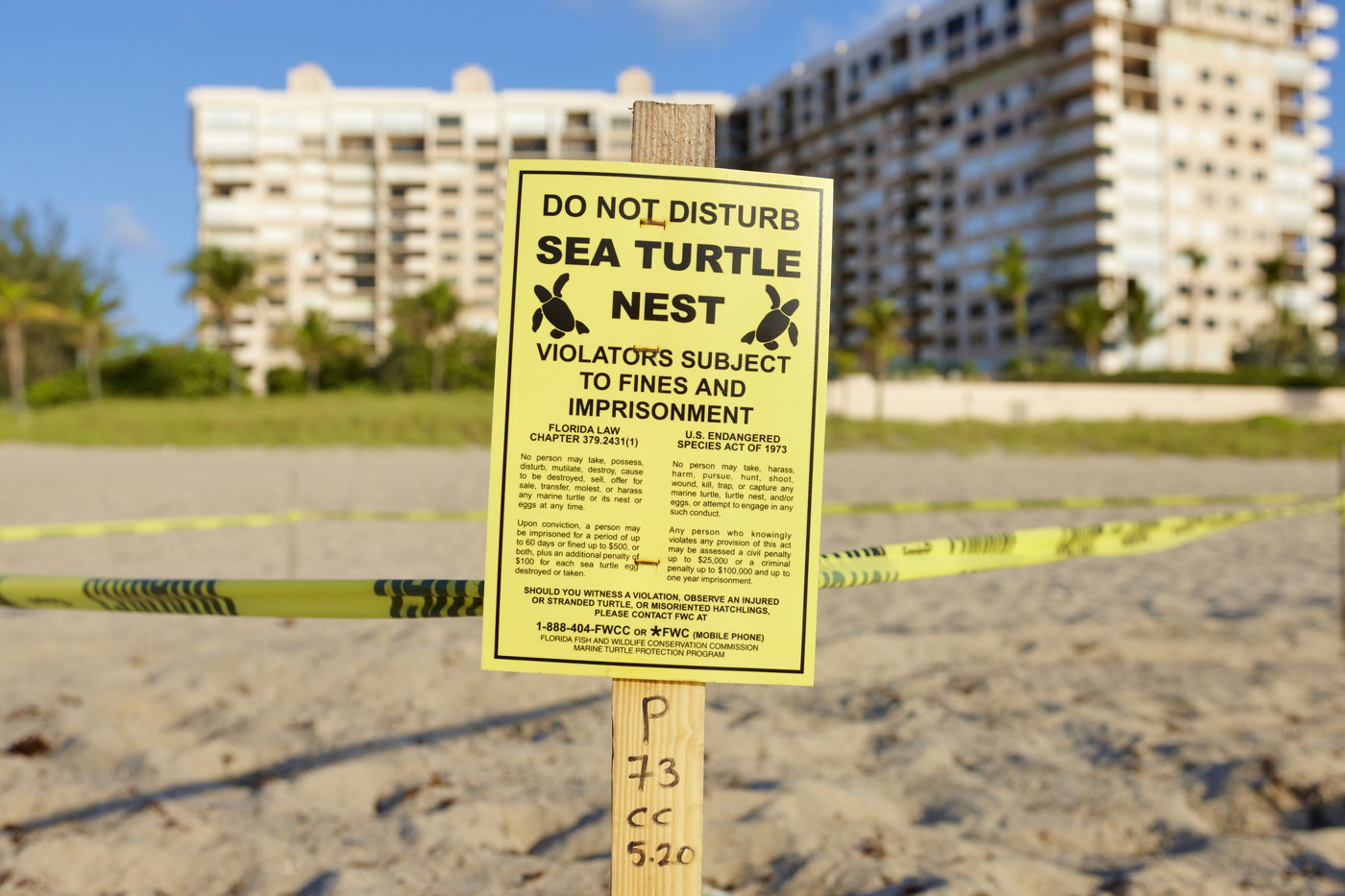
If you come across an adult or a hatchling, please remain at a distance, do not flash any bright lights at it, and immediately call your local sea turtle initiative to report your finding. Do not disturb the animal. Frightened pregnant females may return to the water without nesting. Also, do not touch the turtle’s track marks, as scientists use these as a means to locate the nest and identify the species that laid it.

If you come across a sea turtle, whether it is dead, sick, stranded,  injured, or even if it seems fine, do not touch the animal. Call your local Sea turtle Initiative and report the incident.

The STC provides a list of questions that you should be prepared to answer when reporting the animal:

  • “Where is the exact location of the animal?”
  • “Is the turtle alive or dead?”
  • “What is the approximate size of the turtle?”
  • “Is the turtle marked with spray paint? (This may indicate that the turtle has been previously documented.)”
  • “What is the location of the closest access point to the turtle? 

Depending on location, here is a list of sea turtle emergency responders:

State Authority Number
Alabama Alabama’s Sea Turtle Conservation Program 1-866-Sea-Turtle

(1-866-732-8878-53)

Florida FWC’s 24-hr hotline 1-888-404-3922
Georgia Georgia Stranding Hotline 1-800-272-8363
North Carolina NMFS SEFSC Beaufort Laboratory Hotline 1-800-922-5431
South Carolina South Carolina Stranding Hotline 1-800-922-5431


If you are outside of the regions listed above, you can report a stranded or injured marine animal to the NOAA Fisheries by following this link.

Cleaner Beaches Make Happy Turtles!

The spectacle of watching baby turtles hatch, and make their way to the water, is an emotional experience. Those who are fortunate enough to observe this event will never forget it. Undeniably, these two-inch-long turtle hatchlings are incredibly strong and must brave enormous odds at a very young age. It is our duty, as coastal stewards, to protect and facilitate the hatching process as much as possible. One of the most impactful ways to help sea turtles and other at-risk species is to participate in beach cleanups. For updates on local cleanup efforts in your area, follow this link for more information. Also, check-in with your local sea turtle conservation effort to see if you can participate in any upcoming hatching events. Through mutual effort between conservation initiatives and coastal communities, we can work towards higher survival rates for the sea turtles that also call our shores home.


References:

SEE Turtles, www.seeturtles.org/baby-turtles.


Sea Turtle Conservancy, conserveturtles.org/information-sea-turtles-frequently-asked-questions/.


Florida Fish And Wildlife Conservation Commission, myfwc.com/research/wildlife/sea-turtles/florida/faq/.


“Sea TurtleOversight Protection.” HOME – Sea Turtle Oversight Protection, www.seaturtleop.com/.


Sea Turtle Conservancy, conserveturtles.org/nesting-season-is-may-october/.


Fascinating Facts, 16 June 2015, oceanservice.noaa.gov/news/june15/sea-turtles.html.

Filed Under: Education, News & Events

A Guide to Turtle Nesting Season: How to Prepare

May 8, 2019 by Amanda Post

Turtle Nesting Season has Two Sections

Five different species of sea turtles nest on beaches along the Gulf Coast every summer during turtle nesting season, and over 90% of those turtles will do so along the coast of Florida and Alabama. Kelly Reetz (an Alabama Gulf State Park Naturalist) reports that turtle season lasts from the first of May through the end of October. The season is divided into two timelines. She states that from the beginning of May to the end of August, adult female turtles nest. While from mid-July to the end of October, the eggs hatch. Communities in nesting areas are preparing to welcome these reptile mommas. We encourage you to download this pdf guide by the Fish & Wildlife Service and read it for more information on how to enjoy the beach while being protective of your marine neighbors. There are many ways you can help these lovely creatures. From reducing coastal lighting to adopting a turtle, we invite you to join forces in employing ways to help ensure this nesting season goes smoothly.

Leave No Trash Behind on The Beach

According to the Sea Turtle Conservancy (the world’s oldest sea turtle conservation and research organization), there are a few steps every coastal property owner should take to provide successful nesting grounds for the turtles. The sea turtle eggs and hatchlings face a wide variety of predators. One of the leading causes of hatchling deaths are raccoons. These predators destroy thousands of sea turtle nests every year. We should do what we can to minimize predator presence. First, proactively remove any leftover trash on the beach that will attract unwanted animals. Next, avoid leaving pet food (intended for dogs and cats) outside. These food sources attract wildlife that may impact turtle nests.
Do Your Best to Dim Beachfront Lights

In addition to routine trash removal, the Sea Turtle Conservancy urges property owners to avoid bright lights on the coast. Scientists theorize that sea turtles are phototactic (attracted to light). They appear to be guided by an instinct to follow the brightest light – believing it is the moonlight reflecting off the ocean. However, due to coastal light pollution, thousands of hatchlings and adult turtles become disoriented by the presence of these bright, unnatural lights. This causes them to move inland (instead of out to sea) –often to their premature deaths. The Sea Turtle Conservancy also shares that sea turtles are nocturnal nesters and seek dark locations to lay their eggs. As of 2017, the Florida Fish and Wildlife Conservation Commission (FWC) requires that all cases of hatchling and adult female disorientation be recorded. There is a live tracking app with daily updates of every documented disorientation event on the Floridian coast.

What Is the Sea Turtle Nesting Process Like?

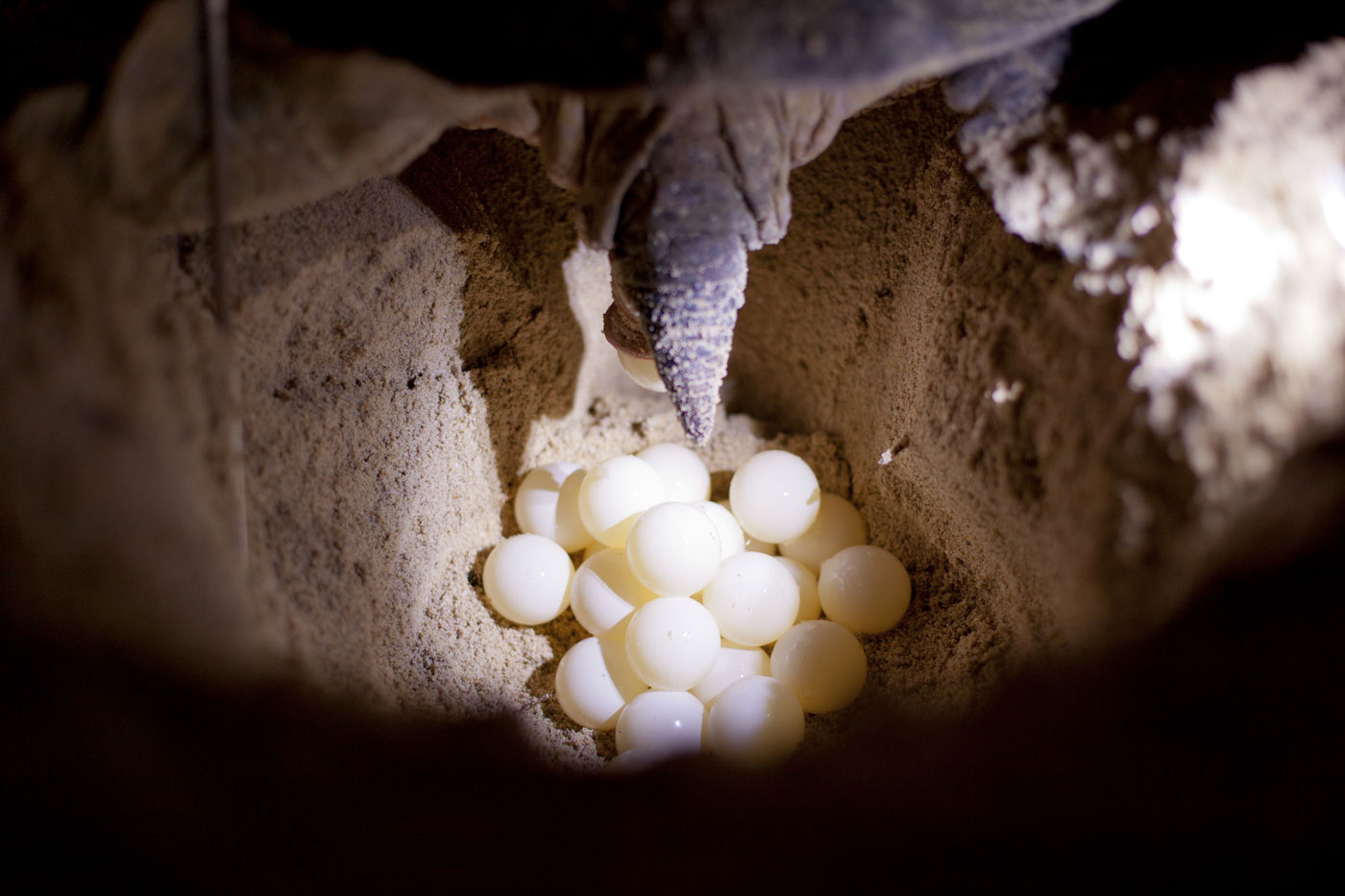
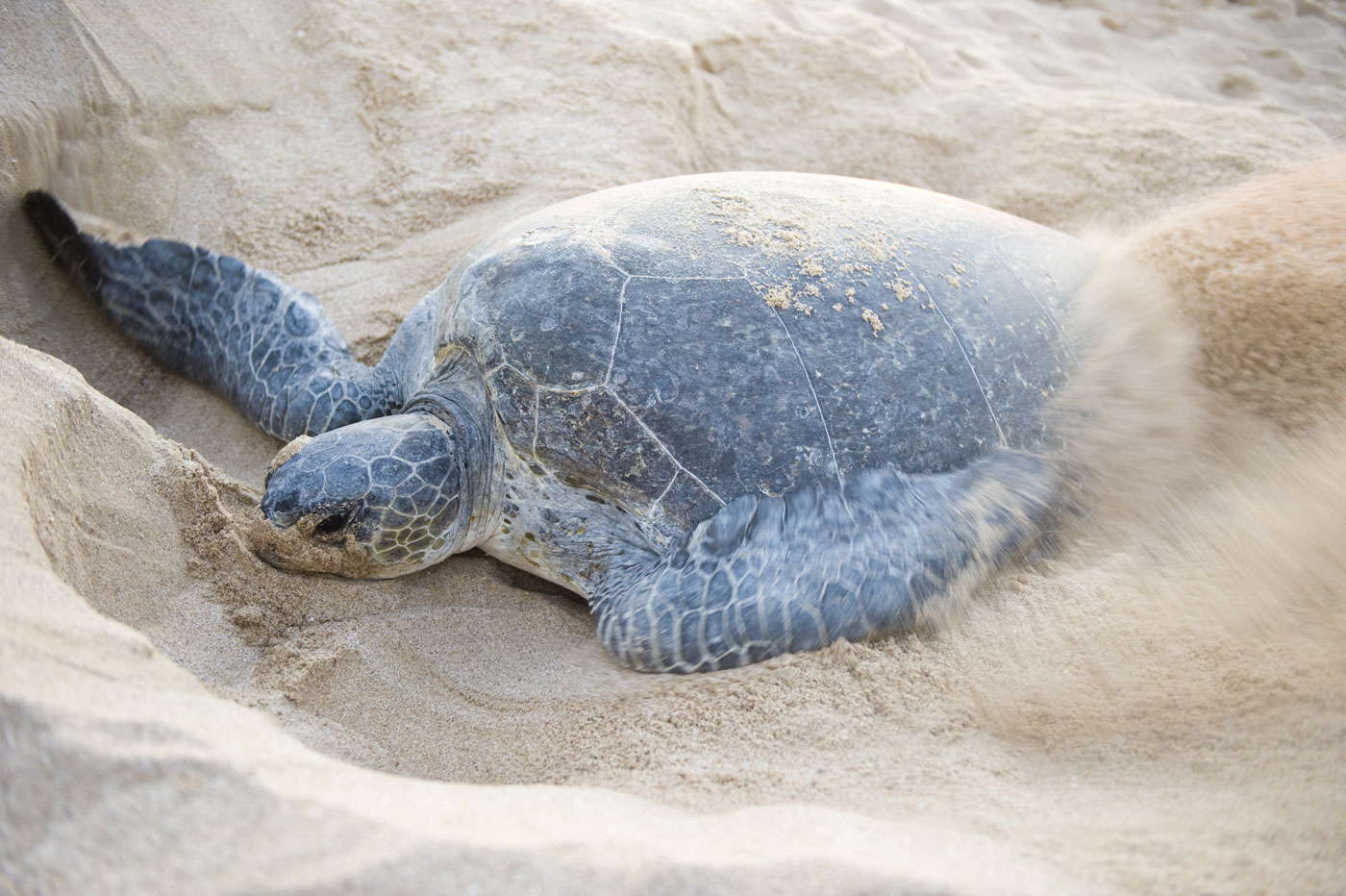
The anatomy of sea turtles and their reproductive instincts are part of what makes these animals so fascinating. According to an in-depth Q&A provided by the Sea Turtle Conservancy, sea turtles lay an average of 110 eggs in a single nest and lay multiple nests per season. That’s a lot of eggs, just for one turtle! Once female turtles select the exact spot for their nest, they dig a body pit using all four flippers and then construct an egg chamber by slowly scooping away sand using their back two flippers. The egg chamber is an impressive structure for an aquatic animal that does not usually burrow and is located two feet below the soil’s surface.  Once the chamber is complete, the turtle’s ovipositor (an egg-laying organ) begins contracting and depositing the eggs. When the turtle is finished, she covers both the nest and her trail to lessen the chance that predators will find the eggs. Sea turtles must nest on land because the eggs breathe through a membrane that cannot be submerged in water.
How Often Do Sea Turtles Nest?

The nesting frequency of sea turtles is unique to each species*

Number of Nests Interval between Nests
Loggerheads 2-3 nests 2-3 weeks
Green Sea Turtles 3-4 nests 2-3 weeks
Leatherbacks 5-7 nests 10 days

*Data provided by the Broward County Conservation Program

Sea turtles do not nest yearly but every second or third year. If the circumstances are favorable, they will nest within five to thirty-five miles from the region where they were hatched or have nested in the past. Several factors influence the frequency of sea turtle nesting, including the environment, food availability, genetic factors, presence of parasites, and other variables. Female sea turtles do not return to any of their nests. Once a hatchling is born, it is entirely on its own.
What Is the Mating Process Like?

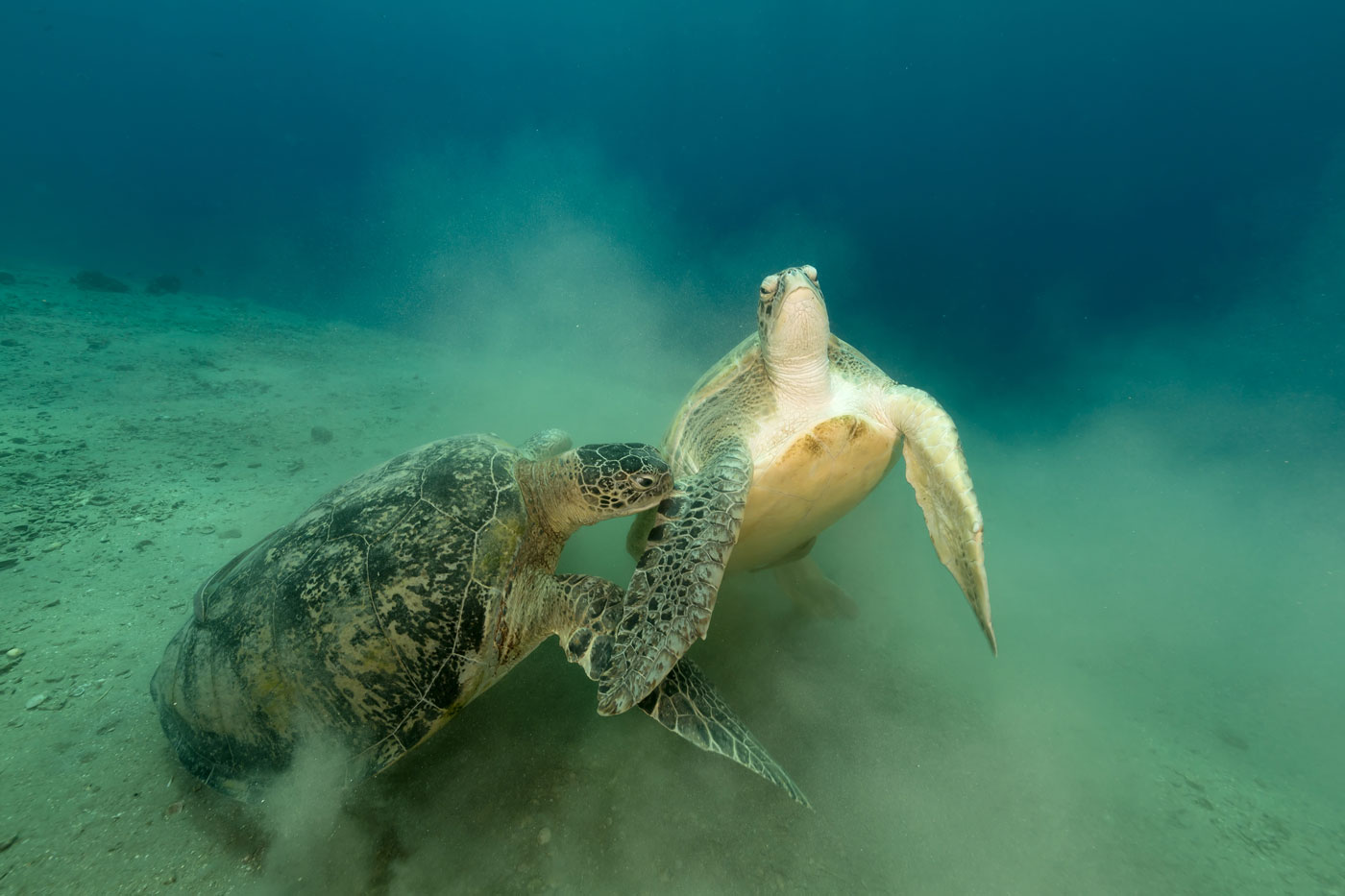
Generally speaking, sea turtles are solitary creatures. They usually only come together to mate. Depending on the species, sea turtles reach sexual maturity between 10 to 50 years after hatching, according to a sea turtle life cycle fact sheet provided by SEE Turtles (a conservation group that helps protect turtles through ecotourism). After hatching, sea turtles venture out during their pelagic (open sea) phase. This phase of a sea turtle’s life cycle is also commonly referred to by scientists as the “lost years.” This name is a result of how difficult it is to track the movements of the young turtles while they forage over large areas of the open ocean. Once they reach sexual maturity, the sea turtles migrate back to the coast to mate and nest. Female sea turtles will mate with multiple males until they have collected enough sperm to fertilize all of their clutches (the number of eggs in a nest) for the season.

Sea Turtles Face Significant Risks

Under the U.S. Endangered Species Act (ESA), all sea turtles found in American waters are designated as threatened or endangered. When deemed threatened, the species is considered likely to become endangered. When a species is labeled as endangered, they are designated at risk of extinction. Sea turtles encounter both onshore and offshore challenges that are difficult to overcome. Many prime sea turtle nesting sites have been reduced or destroyed by extensive development. To protect the species, coastal communities need to be mindful of onshore activities in nesting zones.

Volunteering Opportunities for This Upcoming Summer

This season, consider volunteering with your local conservation group. Stay in a cozy cabin or cottage close to the sea turtle action at Gulf State Park. If you are looking into overseas travel destinations, ecotourism is a way to volunteer while enjoying your vacation. Follow this link for a list of international sea turtle conservation organizations that need your help. Because these animals nest on beautiful beaches, working with sea turtles is fun and rewarding! Whether your contribution is simply picking up trash left on the beach or taking time off from work to volunteer in an ecotourism event, every effort counts towards achieving the long-term goal of sea turtle preservation.

Sources:

“Disorientations.” Florida Fish And Wildlife Conservation Commission, myfwc.com/wildlifehabitats/wildlife/sea-turtle/lighting/disorientations/.

“Life Cycle of A Sea Turtle.” SEE Turtles, www.seeturtles.org/sea-turtle-life-cycle.

“Sea Turtle Nesting Behavior.” NSU, cnso.nova.edu/seaturtles/nesting-behavior.html.

“Tips for Sea Turtle Nesting Season May – October – Sea Turtle Conservancy.” Sea Turtle Conservancy, 1 May 2018, conserveturtles.org/nesting-season-is-may-october/.

Filed Under: Education

  • « Go to Previous Page
  • Page 1
  • Page 2
  • Page 3

Primary Sidebar

CONTACT INFORMATION

WE ARE MOTHER NATURE'S MEDICAL TEAM

Toll-Free: 866-386-3737
info@DuneDoctors.com

QUICK LINKS

Get Started
Our Services
Articles
Contact Us

dune-doctors-dmp-icons

SIGN UP TO OUR ENEWSLETTER!

Join Our "On Call" Newsletter

Copyright © Dune Doctors. All rights reserved. Privacy Policy

We use cookies to analyze our website traffic and to support technical features that enhance your user experience. Read our Privacy Policy to learn more about how we use cookies.
Cookies SettingAccept
Manage consent

Privacy Overview

This website uses cookies to improve your experience while you navigate through the website. Out of these, the cookies that are categorized as necessary are stored on your browser as they are essential for the working of basic functionalities of the website. We also use third-party cookies that help us analyze and understand how you use this website. These cookies will be stored in your browser only with your consent. You also have the option to opt-out of these cookies. But opting out of some of these cookies may affect your browsing experience.
Necessary
Always Enabled
Necessary cookies are absolutely essential for the website to function properly. These cookies ensure basic functionalities and security features of the website, anonymously.
CookieDurationDescription
cookielawinfo-checkbox-analytics11 monthsThis cookie is set by GDPR Cookie Consent plugin. The cookie is used to store the user consent for the cookies in the category "Analytics".
cookielawinfo-checkbox-functional11 monthsThe cookie is set by GDPR cookie consent to record the user consent for the cookies in the category "Functional".
cookielawinfo-checkbox-necessary11 monthsThis cookie is set by GDPR Cookie Consent plugin. The cookies is used to store the user consent for the cookies in the category "Necessary".
cookielawinfo-checkbox-others11 monthsThis cookie is set by GDPR Cookie Consent plugin. The cookie is used to store the user consent for the cookies in the category "Other.
cookielawinfo-checkbox-performance11 monthsThis cookie is set by GDPR Cookie Consent plugin. The cookie is used to store the user consent for the cookies in the category "Performance".
viewed_cookie_policy11 monthsThe cookie is set by the GDPR Cookie Consent plugin and is used to store whether or not user has consented to the use of cookies. It does not store any personal data.
Functional
Functional cookies help to perform certain functionalities like sharing the content of the website on social media platforms, collect feedbacks, and other third-party features.
Performance
Performance cookies are used to understand and analyze the key performance indexes of the website which helps in delivering a better user experience for the visitors.
Analytics
Analytical cookies are used to understand how visitors interact with the website. These cookies help provide information on metrics the number of visitors, bounce rate, traffic source, etc.
Advertisement
Advertisement cookies are used to provide visitors with relevant ads and marketing campaigns. These cookies track visitors across websites and collect information to provide customized ads.
Others
Other uncategorized cookies are those that are being analyzed and have not been classified into a category as yet.
SAVE & ACCEPT